
The Food Safety Modernization Act shifted food safety expectations from reaction to prevention. For food manufacturers, that means building systems that identify hazards in advance, apply practical controls, verify those controls, and keep records that show the program is working. Within that framework, foreign material risks still demand close attention. While detectable products are not a standalone FSMA requirement, they can play a useful role in a broader preventive controls strategy when facilities use them as part of a documented program.
Under FSMA’s preventive controls rule for human food, facilities subject to 21 CFR Part 117 must prepare and implement a written food safety plan, conduct a hazard analysis, and identify preventive controls when needed. Physical hazards such as metal and glass fragments are specifically recognized in hazard analysis, and FDA’s CGMP requirements also state that production procedures must not contribute to contamination from any source. That puts foreign material prevention squarely inside day-to-day food safety management.
Where Foreign Material Fits in FSMA Preventive Controls
Foreign material contamination can come from many sources inside a facility. Common examples include broken tools, damaged plastic parts, loose pieces of PPE, packaging fragments, worn line components, and maintenance materials introduced near exposed product. During hazard analysis, facilities are expected to evaluate known or reasonably foreseeable hazards based on the food, process, equipment, ingredients, packaging activities, sanitation, employee practices, and other relevant conditions.
That is where detectable products can support the overall program. If a facility uses tools, utensils, or PPE in areas where pieces could be unintentionally introduced into product, switching from conventional items to detectable versions can make contamination easier to identify with inspection systems and easier to manage through accountable line controls. This is not a substitute for sanitation, preventive maintenance, or equipment design, but it can strengthen the control system around physical hazards.
The Role of Detection Systems
FSMA does not tell every manufacturer to use the same foreign material detection technology. The appropriate control depends on the product, the process, and the hazard analysis. In practice, facilities may rely on metal detection, X-ray inspection, screens, sieves, filters, magnets, visual inspection, or layered combinations of those controls.
Detectable materials help because they are designed to be more readily found by certain inspection systems than standard plastics or ordinary floor-use items. That can improve the facility’s ability to identify lost fragments or damaged components before product is released. In other words, detectable tools and PPE support the detection step inside a larger preventive controls program, especially where foreign material risks are already known.
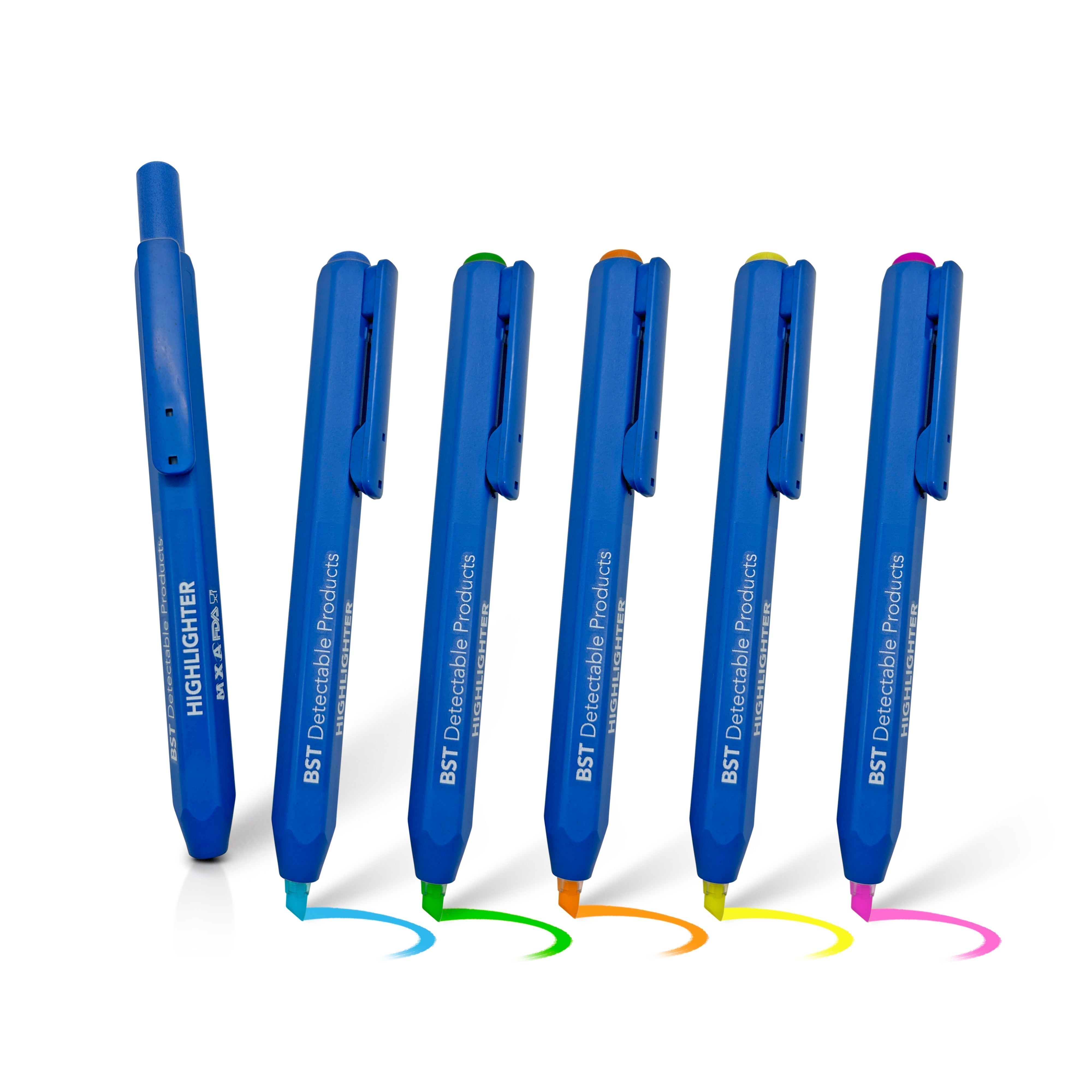
For example, if a plant uses hand scrapers, scoops, knives, beard covers, or gloves near exposed product, choosing detectable versions may support better contamination identification than standard alternatives. Blue Supply Company carries product categories that fit this use case, including detectable scrapers, detectable scoops, detectable safety knives, detectable PPE, and detectable UHMW-PE sheets used for applications such as wear strips, guide rails, and scrapers.
How Detectable Products Support FSMA Programs
A compliance-oriented facility does not simply purchase detectable items and assume the problem is solved. To support FSMA expectations, those materials should be incorporated into written procedures and day-to-day controls.
First, the facility should identify where detectable products make sense based on hazard analysis. High-risk areas often include open product zones, post-kill or ready-to-eat handling areas, packaging lines, maintenance activity near exposed product, and sanitation operations that rely on hand tools.
Second, the facility should define approved items and where they may be used. This may include line-issued scrapers, detectable gloves, detectable beard covers, detectable aprons, detectable scoops, or detectable engineering plastics. Standardizing approved items reduces variation and makes it easier to train employees and inspect compliance.
Third, facilities should connect those materials to inspection and response procedures. If a tool breaks, if a fragment is missing, or if a detector challenge fails, personnel should know exactly how to isolate product, inspect the area, document the event, and determine disposition. Detectable products are most valuable when they are tied to a clear breakage and corrective action process.
Training, Monitoring, and Documentation Matter
FSMA places real emphasis on qualified personnel, monitoring, corrective actions, verification, and records. That means employees need more than general GMP training. They should understand which tools and PPE are approved, how to inspect them before use, when to replace them, how to report damage, and what to do if anything is unaccounted for.
Documentation should be just as practical. Many facilities include approved-item lists, pre-op inspection forms, tool accountability logs, breakage reports, detector verification records, corrective action forms, and periodic program reviews. These records help show that the foreign material control program is not just written, but implemented.
For preventive controls qualified individuals and compliance managers, the key point is straightforward: detectable products are not the preventive control by themselves. They are support tools that can strengthen hazard identification, improve contamination detection, and make physical hazard programs easier to manage under FSMA. Used correctly, they help facilities build a more disciplined and more defensible approach to foreign material prevention.
When a facility aligns detectable tools, detectable plastics, and detectable PPE with hazard analysis, employee training, inspection systems, and documented corrective actions, it is better positioned to support FSMA preventive control expectations and reduce foreign material risk in everyday operations.